Affiliate Disclosure
Some links on this page are affiliate links. If you book through them, we may earn a commission at no additional cost to you. This helps support our independent travel guides.
Wake Up to Volcanoes, End the Day on the Beach: Your Dream Costa Rica Itinerary
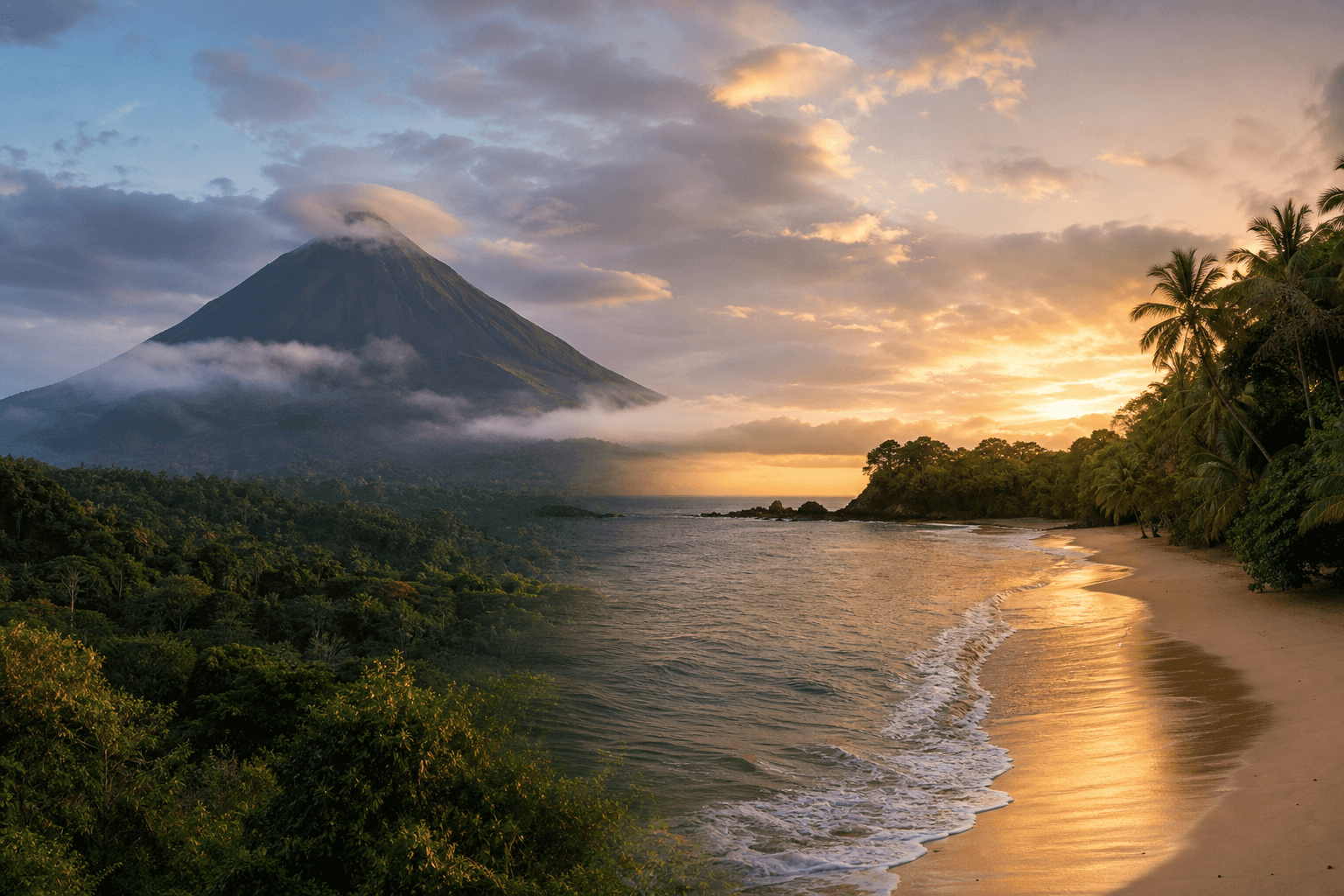
You wake up to mist moving across Arenal Volcano and howler monkeys calling somewhere beyond the trees. A few days later, you are barefoot on the Pacific coast, watching the sun disappear into the ocean.
That is the beauty of a Costa Rica itinerary. But this is a Costa Rica itinerary for first-time visitors, and it comes with one surprise: the country looks small on the map, but it does not travel small.
For five days, stick to La Fortuna and Manuel Antonio for volcanoes, rainforest, wildlife, and the Pacific coast. Give yourself ten days, and Monteverde joins the journey without turning your holiday into a race between hotel check-ins.
This guide takes you through both routes, day by day, with the travel times, seasonal considerations, and practical decisions you need to plan them properly.
One Country, Two Unforgettable Journeys
Almost everyone planning Costa Rica starts with the same question:
“Do I have enough days?”
A better question is: what kind of trip do I want?
A 5-day Costa Rica itinerary keeps you moving. One day, you are standing beneath the Arenal Volcano; soon after, you are watching sloths in Manuel Antonio before ending the day beside the Pacific. It is a faster journey, but one that still covers two distinct sides of Costa Rica.
Ten days changes the pace. You can add Monteverde, spend longer in each place, and stop treating every morning like the beginning of another transfer day. There is time for that extra coffee or an unplanned stop along the road.
Neither journey is better. Five days gives you a memorable introduction. Ten days lets you know Costa Rica a little better.
So do not choose by numbers alone. Choose how you want to travel.
How Many Days Do You Need in Costa Rica?
Five days, if that is all life allows. Ten, if you have more time for the road.
Neither answer is wrong. They simply give you two different versions of Costa Rica.
A 5-day Costa Rica itinerary works best when you limit yourself to two regions. Begin around Arenal Volcano and La Fortuna, then move towards Manuel Antonio for rainforest, wildlife, and the Pacific coast. The pace is quick, but realistic. More destinations would mean spending too much of a short holiday checking out of hotels and sitting on the road.
Ten days gives you room to add Monteverde without rushing through it. Somewhere around the middle of the journey, you may stop asking what comes next. There is time for another coffee, a roadside stop, or ten extra minutes watching a hummingbird that was never on your schedule.
One thing catches many first-time visitors by surprise: Costa Rica looks small on the map, but it does not travel small. Mountain roads, changing weather, and slower routes mean distances can take longer than expected.
So five days? Choose two regions and experience them properly.
Ten days? Add the cloud forest and give the journey more breathing room.
The question is not how much of Costa Rica you can cover. It is how much you can experience without spending your holiday rushing between destinations.
Costa Rica Itinerary at a Glance
| 5-Day Costa Rica Itinerary | 10-Day Costa Rica Itinerary |
|---|---|
| Best for: First-time visitors with limited time | Best for: Travelers wanting a slower, more varied journey |
| Trip style: Volcano, rainforest, wildlife, beach | Trip style: Volcano, rainforest, cloud forest, wildlife, beach |
| Regions: La Fortuna/Arenal + Manuel Antonio | Regions: La Fortuna/Arenal + Monteverde + Manuel Antonio |
| Days 1–2: La Fortuna and Arenal Volcano: rainforest activities, wildlife, hot springs | Days 1–3: La Fortuna and Arenal Volcano: hiking, wildlife, hot springs, rainforest activities |
| Day 3: Travel from Arenal to Manuel Antonio | Days 4–5: Monteverde: cloud forest, wildlife, hanging bridges |
| Days 4–5: Manuel Antonio: national park, wildlife, Pacific beaches | Day 6: Travel from Monteverde to Manuel Antonio |
| Departure: Return to your departure airport based on flight timing | Days 7–9: Manuel Antonio: national park, wildlife, beaches, slower coastal days |
| Day 10: Return to your departure airport and fly home |
The Best Time to Visit Costa Rica
Search for the best time to visit Costa Rica and you may find two answers: dry season or green season. Neither is wrong. From December to April, the Pacific side generally sees less rain and easier travel conditions. From May to November, rainfall increases, landscapes become greener, and visitor numbers often fall.
For this itinerary, season matters because you are moving between Arenal, Monteverde, and Manuel Antonio—three places with different elevations and weather patterns. Choose the dry season for predictability and the green season for fewer crowds and greener landscapes. The route remains the same; the experience changes.
Dry Season
December to April is generally the easiest period for a first Costa Rica trip. Trails are typically drier, road conditions are more predictable, and clearer weather can improve your chances of seeing Arenal Volcano without heavy cloud cover.On the Pacific coast around Manuel Antonio, daytime temperatures commonly sit in the high 20s°C, making beach days easier to plan. The trade-off is demand.
La Fortuna and Manuel Antonio become busier, while accommodation prices can rise around Christmas, New Year, and spring break. If traveling during peak holiday periods, reserve hotels, rental cars, and popular activities well before arrival.
Green Season
The green season runs from May to November, but rain does not necessarily mean losing an entire day indoors. In many Pacific and central regions, mornings can be relatively clear before heavier showers arrive later in the day. September and October are typically among the wetter months on the Pacific side.
The advantage is visible everywhere: forests become greener, rivers carry more water, and waterfalls gain volume. Hotels may also offer better rates outside peak periods, while popular attractions can feel quieter. Plan outdoor activities for mornings, carry rain protection, and allow extra travel time when heavy rainfall affects rural or unpaved roads.
Which Season Fits Your Itinerary Best?
For a 5-day itinerary, the dry season offers greater predictability. With only two days around Arenal and two around Manuel Antonio, prolonged rain or slower road conditions can have a greater impact on your plans.
A 10-day Costa Rica itinerary gives you more flexibility, making the green season easier to consider. You can adjust hiking times, move outdoor activities to the morning, or wait for an afternoon shower to pass without losing a large part of the trip.
One exception is Monteverde: expect cooler, wetter, and mistier conditions than Manuel Antonio regardless of season. After all, the cloud forest is part of why you go there.
Before You Start Your Costa Rica Adventure
The tickets are booked. Costa Rica is no longer an imagination, and now the practical exploration begins: airports, transport, luggage, hotels, and experiences.
A few decisions can make the journey considerably easier. Costa Rica has two major international airports, and the cheapest flight may not land closest to your first destination. Driving gives you freedom, but road conditions and rental-car insurance need attention. Packing for Manuel Antonio is also different from preparing for cooler, wetter Monteverde.
Nothing difficult, really. Just know what your particular route demands before leaving home. A little planning now can prevent sudden changes once the journey begins.
Choosing the Best Airport
Costa Rica’s two main international gateways are Juan Santamaría International Airport (SJO), near San José, and Guanacaste Airport (LIR), near Liberia. Do not automatically book SJO simply because La Fortuna and Arenal come first. Compare flight prices and actual driving times from both airports.
For travelers heading first to Guanacaste’s northwestern beaches, LIR is generally the more convenient gateway. For this Arenal–Monteverde–Manuel Antonio route, your arrival and departure times matter too. A cheaper evening flight may leave you facing a long road journey after dark. Check the entire route before booking the airfare, not just the flight.
Renting a Car or Using Shared Transfers
A rental car gives you freedom between La Fortuna, Monteverde, and Manuel Antonio, particularly if you want to make unscheduled stops. However, Costa Rican roads can be slower than distances suggest, while mountainous and unpaved sections require extra care.
Check rental terms closely before booking. Mandatory basic insurance can increase the price you initially see online, and a higher-clearance vehicle may be useful depending on your route and season.
Shared shuttles remove the responsibility of driving and connect major tourist destinations. They work well if you are following a fixed itinerary. Choose a car for flexibility; choose transfers for a simpler journey between planned stops.
What to Pack
Pack for three environments, not one tropical country. La Fortuna is warm and humid, Monteverde sits at a higher elevation with cooler, wetter conditions, while Manuel Antonio brings Pacific heat and strong sun.
Quick-drying clothes work across the route, but carry a lightweight rain jacket even outside the green season. Bring comfortable hiking shoes with good grip for rainforest and cloud-forest trails, plus sandals for the coast. Sunscreen and insect repellent are essentials.
A small dry bag or waterproof phone pouch is useful around waterfalls, rafting trips, and sudden showers. Keep a reusable water bottle and a light layer handy for Monteverde.
A Few Things First-Time Visitors Should Know
The Costa Rican colón is the local currency, although US dollars are accepted at many tourism-oriented businesses. Carry some colones for smaller purchases, and check whether prices are quoted in dollars or colones before paying.
Travel times deserve particular attention. A route that looks short on Google Maps can take longer because of winding mountain roads, weather, traffic, or road conditions. Avoid packing major activities tightly around transfer days.
Finally, Costa Rica’s pace may feel slower than home. Allow time for meals, road journeys, and unexpected stops. Build some breathing room into the itinerary instead of planning every hour before you arrive.
The Five-Day Costa Rica Itinerary: Volcanoes to the Pacific Coast
Five days in Costa Rica means choosing carefully. This route gives you two bases: La Fortuna for Arenal Volcano and rainforest experiences, followed by Manuel Antonio for wildlife and the Pacific coast. You avoid squeezing Monteverde into an already tight schedule and losing another day to transfers.
Spend Days 1–2 around Arenal, use Day 3 to travel south toward Manuel Antonio, and reserve Days 4–5 for the national park and beaches. The itinerary works best when arrival and departure flights leave enough time for road transfers, which often take longer than the distance on the map suggests.
Days 1–2: La Fortuna & Arenal Volcano
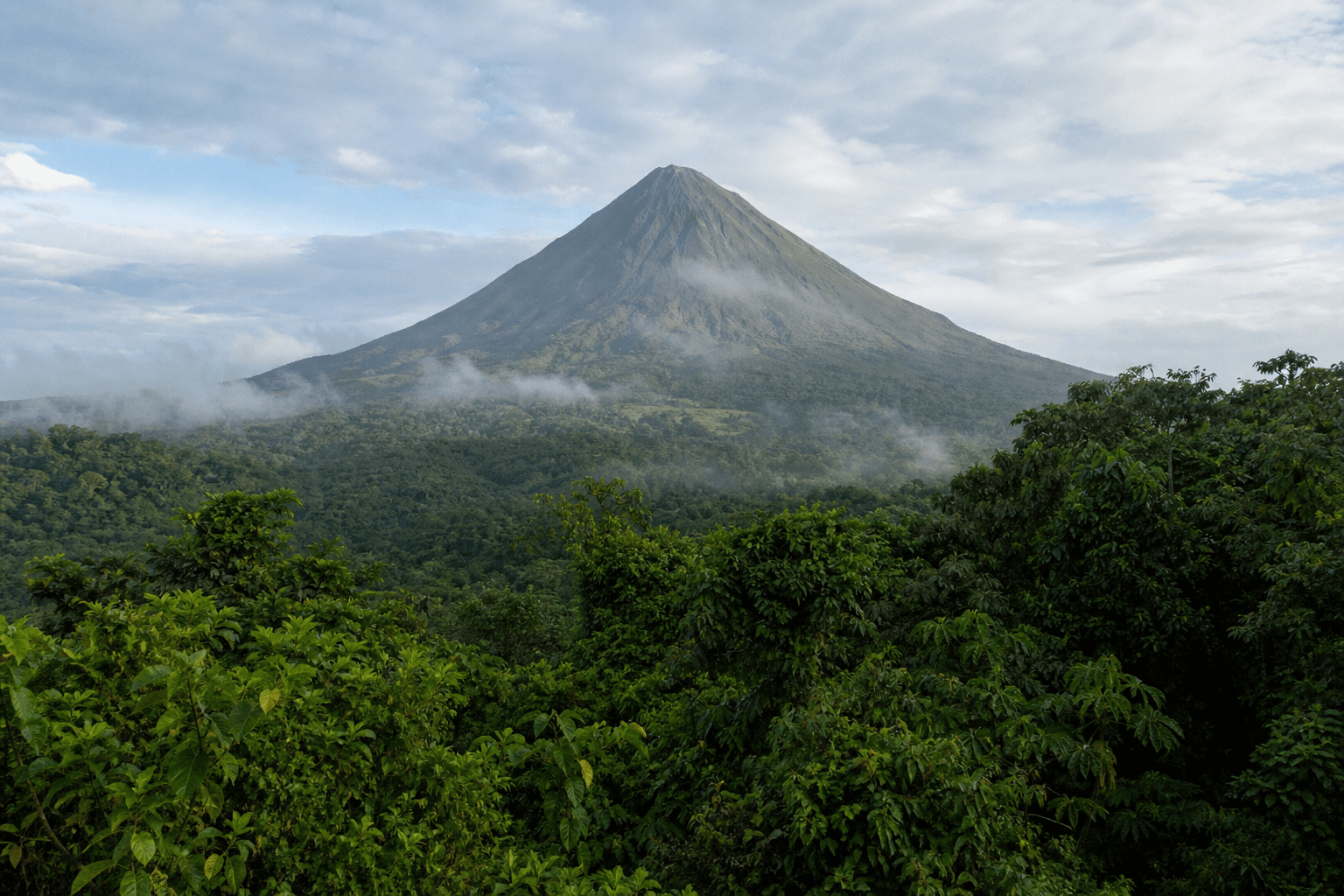
Use La Fortuna as your base for two nights. Arenal Volcano National Park, rainforest trails, hanging bridges, hot springs, and wildlife tours are all accessible from the area. Do not try to fit everything into one day.
Give Day 1 to the volcano and surrounding rainforest, then use Day 2 for activities such as hanging bridges, a wildlife walk, or hot springs. If clouds hide Arenal when you arrive, wait. Visibility around the volcano can change considerably during the day.
Morning Highlights
Start early, when temperatures are cooler and wildlife tends to be more active. Explore Arenal Volcano National Park or choose a guided rainforest walk if spotting toucans, monkeys, and sloths matters more than covering distance. Keep your schedule flexible enough to take advantage of a clear view of Arenal when the clouds move.
Afternoon Experiences
After lunch, choose one major experience rather than rushing between several. Mistico-style hanging bridges offer a different view of the rainforest canopy, while adventure travelers can consider zip-lining or a waterfall visit. During the green season, schedule outdoor activities earlier where possible, as afternoon rainfall is more common.
Evening Suggestions
La Fortuna’s geothermal setting makes the evening ideal for hot springs. Options range from resort complexes to smaller thermal pools, so choose according to budget rather than assuming the most expensive experience is necessary. After two active days, an evening soak also makes more sense than adding another organized tour to an already full itinerary.
Day 3: The Journey from Arenal to Manuel Antonio
The journey from Arenal to Manuel Antonio is a transfer day, so treat it as part of the itinerary rather than lost time. Driving commonly takes around five to six hours depending on traffic, weather, road conditions, and stops.
Leave after breakfast rather than planning another major Arenal activity first. An early departure also gives you a better chance of reaching Manuel Antonio before dark and settling in before your two coastal days begin.
Scenic Stops Along the Way
If time allows, make one worthwhile stop rather than several rushed ones. The route toward the central Pacific can take you near the Tárcoles River area, known for American crocodiles, while Carara National Park sits conveniently near Route 34 and protects transitional forest rich in birdlife.
Making the Drive Enjoyable
Fill the fuel tank before long stretches, keep water and snacks accessible, and download offline maps in case mobile coverage weakens. Avoid assuming arrival times based purely on distance. Mountain roads, slower vehicles, rain, and traffic can extend the journey. If self-driving, reaching Manuel Antonio before nightfall makes the final section considerably easier.
Days 4–5: Manuel Antonio National Park & Pacific Beaches
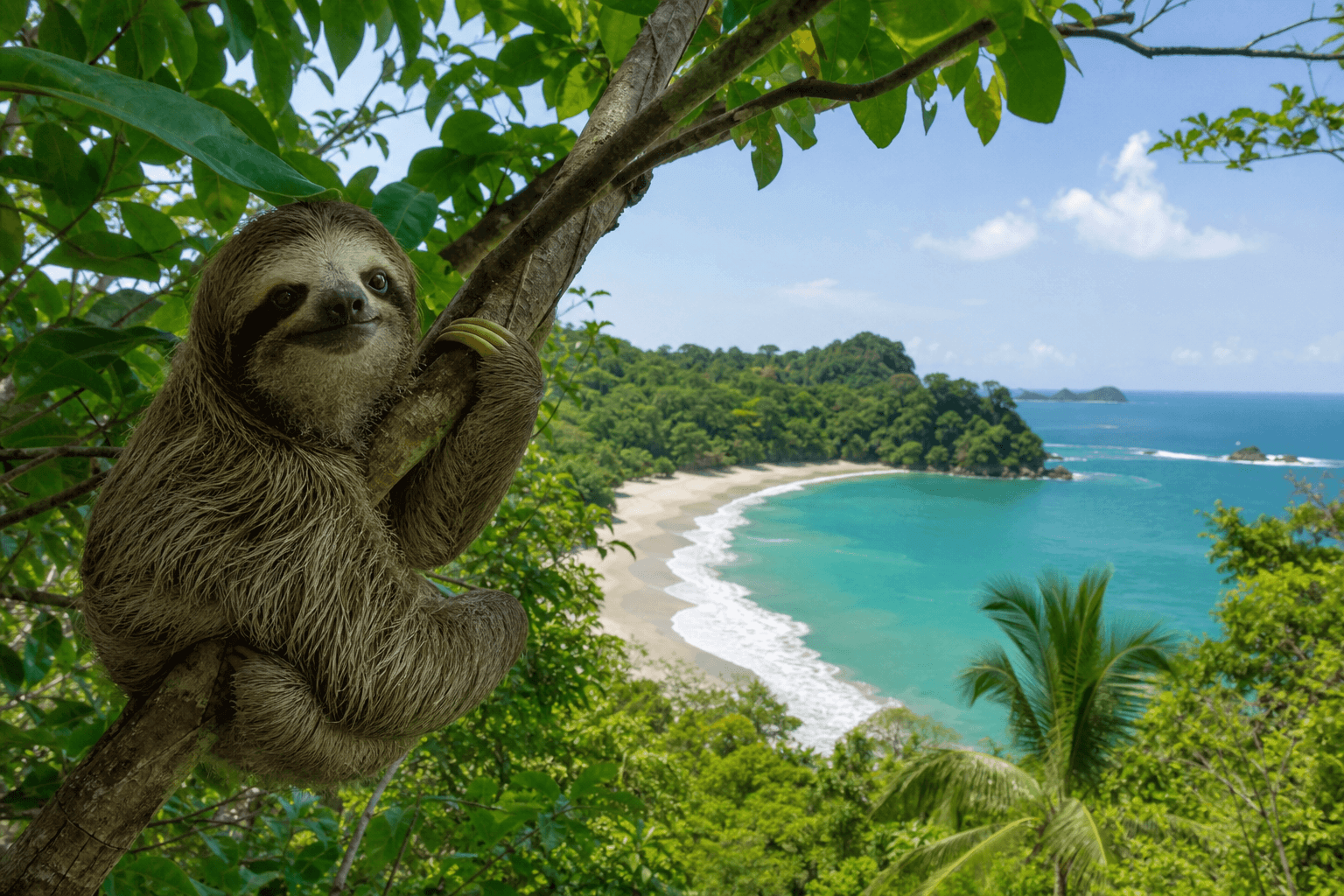
Give one morning to Manuel Antonio National Park and keep the remaining time for the coast. Reserve park admission in advance through Costa Rica’s SINAC system rather than arriving without a plan; the official booking platform limits Manuel Antonio ticket purchases per personal transaction.
Keep the second day less structured. After three days of volcanoes, rainforest, and driving, you finally have room for a slower beach day before departure.
Wildlife Encounters
Enter the park early, when temperatures are more comfortable and wildlife viewing can be rewarding. Look for sloths, monkeys, iguanas, and tropical birds, but never feed or approach animals for photographs. A naturalist guide can help spot wildlife that is easily missed in the canopy. Follow marked trails and current park regulations.
Sunset Experiences
After the national park, leave enough time for the Pacific coast without scheduling another major excursion. Choose a nearby beach, swim when conditions are safe, and stay for sunset. After five days moving from Arenal’s volcanic landscape to the central Pacific, this is the moment to stop following the itinerary. You have reached the coast.
The Ten-Day Costa Rica Itinerary: Cloud Forests & Pacific Shores
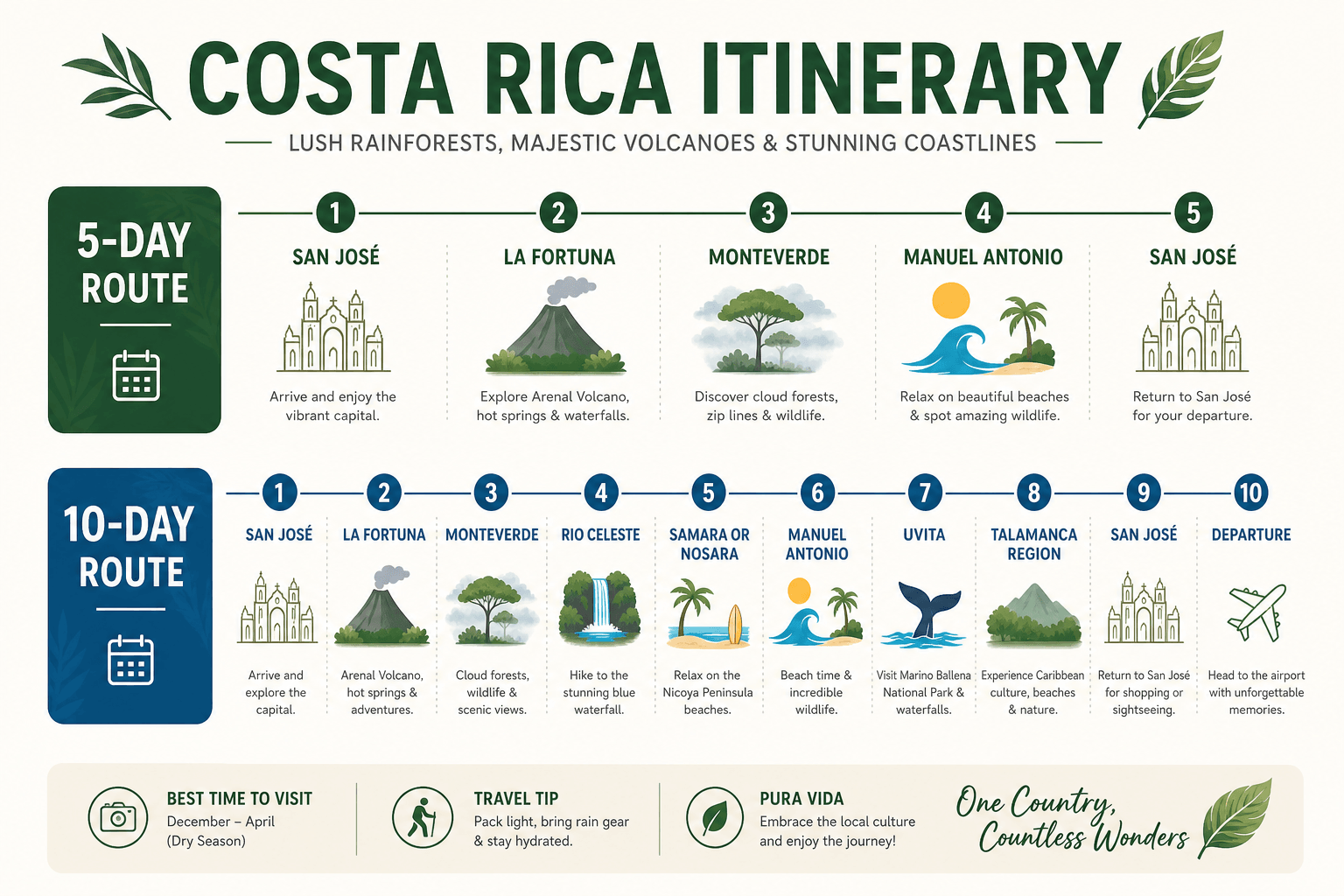
Ten days allows you to connect three distinct Costa Rican landscapes without changing hotels every night. Spend three days around La Fortuna and Arenal, two in the cooler cloud forests of Monteverde, then travel south for four days around Manuel Antonio and the Pacific coast.
Day 6 becomes your main transfer day. Compared with the five-day route, the extra time is not about adding as many destinations as possible. It gives you three well-paced bases, more flexibility around changing weather, and enough time to experience the rainforest, cloud forest, wildlife, and coast without making every day a race against the clock.
10 Visit-Worthy Places for Your 10-Day Costa Rica Itinerary
- Arenal Volcano: Iconic volcano surrounded by rainforest trails, lava fields, wildlife, and geothermal landscapes.
- La Fortuna Waterfall: Dramatic 70-meter waterfall reached by forest steps, with swimming available downstream.
- Arenal Hot Springs: Naturally heated thermal waters offering relaxing evenings after hiking around La Fortuna.
- Mistico Arenal Hanging Bridges: Suspension bridges crossing rainforest canopy with opportunities for wildlife spotting and volcano views.
- Monteverde Cloud Forest Reserve: Mist-covered highland forest protecting exceptional biodiversity, orchids, birds, and rare wildlife.
- Santa Elena Cloud Forest Reserve: Quieter cloud-forest alternative offering dense trails, misty scenery, and excellent birdwatching.
- Tárcoles River: Popular route stop known for large American crocodiles visible near the famous bridge.
- Manuel Antonio National Park: Compact national park combining rainforest trails, sloths, monkeys, and beautiful Pacific beaches.
- Playa Espadilla: Easily accessible Pacific beach near Manuel Antonio, popular for swimming and sunset walks.
- Damas Island Mangroves: Mangrove ecosystem explored by boat or kayak, with monkeys, reptiles, and tropical birds.
Days 1–3: Discovering La Fortuna & Arenal
Three days around La Fortuna gives you time to separate Arenal’s major experiences. Use one day for Arenal Volcano National Park and nearby trails, another for hanging bridges or a guided wildlife experience, and keep an evening for the area’s geothermal hot springs.
Start outdoor activities early, particularly during the green season when afternoon showers are more common. The third day also gives you flexibility if clouds hide the volcano or weather changes an activity you had planned.
Days 4–5: Monteverde’s Cloud Forest
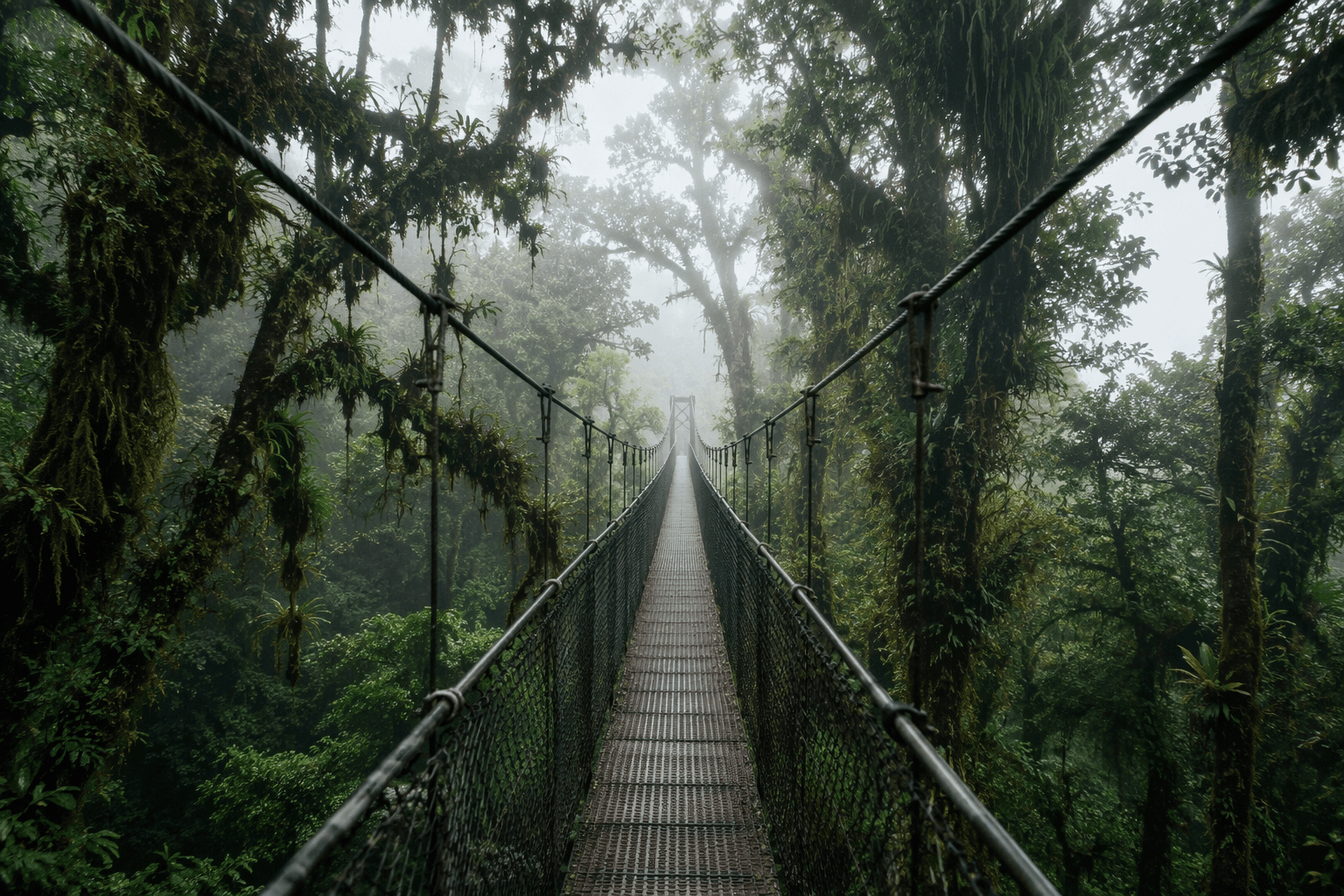
Travel from La Fortuna to Monteverde and expect the journey to take several hours despite the relatively short distance on the map. Monteverde sits at a higher elevation, so temperatures are cooler and conditions can be misty, windy, and wet. Pack a light layer and rain protection.
Give yourself one full day for the cloud forest rather than treating Monteverde as an overnight stop. The ecosystem here is distinctly different from the warmer rainforest you have just left around Arenal.
Suspension Bridges
Suspension and hanging-bridge experiences take you into the forest canopy, offering a perspective that ground-level trails cannot. Go early for cooler conditions and fewer visitors. Wear shoes with good grip because paths can remain damp even outside the green season. Allow enough time to walk rather than treating the bridges as a quick photo stop.
Wildlife & Night Walks
Monteverde is known for remarkable biodiversity, but wildlife is not guaranteed to appear beside the trail. A naturalist guide can improve your chances of identifying birds and animals hidden in dense vegetation. Guided night walks reveal a different forest, with opportunities to see frogs, insects, sleeping birds, and other nocturnal wildlife. Carry a light rain jacket.
Day 6: From Monteverde to Manuel Antonio
Leave Monteverde in the morning for the journey toward Manuel Antonio. Allow roughly four to five hours by road, depending on weather, traffic, and stops. This is another day when distance alone can be misleading, so avoid booking a fixed afternoon activity on the coast.
If driving yourself, consider a stop around the Tárcoles River area before continuing south on Route 34. Aim to reach Manuel Antonio with enough daylight left to check in and settle into the coastal pace.
Days 7–10: Slow Down on Costa Rica’s Pacific Coast
After six days of volcanoes, forests, and road journeys, keep the final part of the itinerary less crowded. Dedicate one day to Manuel Antonio National Park, leave another for the beach, and use the remaining time for a coastal activity or simply an unplanned day.
Check your departure airport and flight time before deciding how to use Day 10; returning to the airport can consume a significant part of the day, so an early flight may require traveling closer to the airport the previous evening.
National Park
Visit Manuel Antonio National Park early and reserve admission in advance through the official SINAC booking system. The park combines forest trails, wildlife, and beaches, so allow several hours rather than treating it as a short wildlife stop. A naturalist guide can help spot sloths and monkeys hidden in the canopy. Check current opening days before finalizing your itinerary.
Beach Time
Keep at least half a day without tours. The Manuel Antonio area has Pacific beaches where you can swim, walk, or simply recover from the previous days of hiking and driving. Check local swimming conditions before entering the water, as Pacific currents can vary. Late afternoon also gives you a natural opportunity to stay for sunset.
Optional Day Trips
Use your spare coastal day according to energy rather than obligation. Options around the central Pacific include mangrove and wildlife boat tours near Damas Island, rafting excursions, or additional beach time. Choose one experience instead of filling the day with several. If Day 10 involves a long airport transfer, keep Day 9 relatively relaxed and prepare for an early departure.
Five Days or Ten? Which Costa Rica Journey Fits You Best?
The difference between five and ten days is not simply five extra mornings in Costa Rica. It changes how you travel. Five days works when you want Arenal and the Pacific without spending half the trip changing destinations. Ten days adds Monteverde, reduces the pressure to fit multiple experiences into one day, and gives you more flexibility when weather interferes.
The shorter route suits travelers comfortable with an active schedule. The longer journey works better if wildlife, cloud forests, and slower coastal days matter as much as seeing the country’s highlights.
| Experience | 5-Day Costa Rica Itinerary | 10-Day Costa Rica Itinerary |
|---|---|---|
| Pace | Active, with two main bases | More relaxed, with three main bases |
| Driving | One major transfer between Arenal and Manuel Antonio | Two major transfers: Arenal–Monteverde and Monteverde–Manuel Antonio |
| Budget | Lower overall trip cost, but fewer flexible days | Higher accommodation and food costs, with more time to spread activities out |
| Wildlife | Strong opportunities around Arenal and Manuel Antonio | More varied habitats, adding Monteverde’s cloud-forest wildlife |
| Beaches | Around two days on the Pacific coast | Up to four days around Manuel Antonio and the central Pacific |
| Adventure | Hiking, hanging bridges, hot springs, and coastal activities | More time for hiking, night walks, zip-lining, rafting, and optional excursions |
| Relaxation | Limited; most days have a planned purpose | Greater room for slower mornings, beach time, and weather-related changes |
| Best for | First-time visitors with limited vacation time | Travelers who prefer variety without rushing through each destination |
If five days is what you have, take the five days. You will still experience two very different sides of Costa Rica. If you have ten, use the extra time to go deeper rather than farther. The better itinerary is the one that leaves enough time to enjoy where you are before asking where you need to be next.
Planning Your Budget
Costa Rica can be more expensive than neighboring Central American countries, particularly around La Fortuna and Manuel Antonio. Your final budget depends heavily on season, accommodation style, transportation, and paid adventures.
The green season can bring lower hotel rates, while Christmas, New Year, and spring break usually increase demand. Budget beyond flights and hotels: rental-car insurance, park admission, guided tours, and transfers can add considerably to the trip.
Accommodation
Costa Rica offers everything from hostels and cabins to eco-lodges and luxury resorts. Prices vary significantly by destination and season. For this itinerary, compare stays in La Fortuna, Monteverde, and Manuel Antonio separately rather than assuming one nightly budget throughout. Booking early matters during the dry-season peak.
5 Mid-Range Hotels to Consider in Costa Rica
| Hotel | City | Price Range | Best For |
|---|---|---|---|
| Hotel Casa 69 | San José | Approx. $50–$90/night | Central location and an affordable stop before exploring or departing |
| San Bosco Inn | La Fortuna | Approx. $60–$110/night | Convenient access to La Fortuna and Arenal, with an outdoor pool |
| Camino Verde B&B | Monteverde | Approx. $70–$130/night | Exploring Monteverde’s cloud forests and wildlife near Santa Elena |
| Hotel Plaza Yara | Quepos | Approx. $100–$160/night | Access to Manuel Antonio National Park and Pacific beaches |
| Hotel Boyeros And Conference Center | Liberia | Approx. $70–$120/night | Guanacaste gateway stays and convenient airport access |
DISCLAIMER: Price ranges are approximate and can vary by season, room type, and booking dates.
Transportation
Transportation costs depend on whether you rent a car, use shared shuttles, or arrange private transfers. With a rental, budget beyond the advertised daily rate and review insurance terms carefully. Shared transportation can reduce costs, while a car offers greater flexibility for a multi-stop itinerary.
Budget travelers can use Costa Rica’s extensive intercity bus network to move between major cities and tourist destinations. However, Costa Rica does not have a nationwide passenger rail network, so routes such as San José to Liberia require a bus or road transfer rather than a train.
Food
Eating at local sodas, small Costa Rican restaurants serving traditional meals, can keep food costs manageable while giving you a more local experience. The Costa Rican Tourism Board specifically recommends making lunch your main meal at sodas or local markets when traveling on a budget.
6 Restaurants to Try Across Costa Rica
| Restaurant | City | Price Range | Why Consider It |
|---|---|---|---|
| El Chante Verde | La Fortuna | Approx. ₡5,000–25,000 | Relaxed dining option while exploring La Fortuna and Arenal |
| The Green Restaurant | Monteverde | Approx. ₡5,000–10,000 | Casual dining option conveniently located around Santa Elena |
| Manuel Antonio Falafel Bar | Manuel Antonio | Approx. ₡5,000–10,000 | Popular inexpensive option for travelers staying near the Pacific coast |
| La Criollita | San José | Approx. ₡5,000–10,000 | Affordable option for experiencing local Costa Rican-style food |
| Restaurant El Callejero | Liberia | Approx. ₡10,000–15,000 | Moderately priced dining option for travelers passing through Liberia |
| Koko | Jacó | Approx. ₡10,000–15,000 | Casual dining option in central Jacó along the Pacific coast |
DISCLAIMER: Restaurant prices are approximate and may change over time.
Activities & Park Fees
National parks are relatively affordable compared with private adventure experiences, but guided wildlife walks, hanging bridges, zip-lining, hot springs, and rafting can quickly increase your daily spending. Decide which paid experiences matter most before arriving, then balance them with beaches, self-guided exploration, and lower-cost outdoor activities.
5 National Parks to Consider Across Costa Rica
| National Park | Area | Why Visit | Admission |
|---|---|---|---|
| Arenal Volcano National Park | La Fortuna/Arenal | Volcanic landscapes, old lava flows, rainforest trails, and views toward Lake Arenal | Check current SINAC rate |
| Manuel Antonio National Park | Manuel Antonio | Rainforest trails, wildlife viewing, and Pacific beaches within one compact park | Check current SINAC rate |
| Tenorio Volcano National Park | Bijagua | Rainforest hiking and Río Celeste, known for its striking blue water and waterfall | Approx. US$12 for foreign visitors* |
| Rincón de la Vieja National Park | Liberia area | Active volcanic landscapes, steam vents, boiling mud features, forest, and hiking trails | Check current SINAC rate |
| Carara National Park | Tárcoles/Carara | Transitional rainforest and rich birdlife, including opportunities to see scarlet macaws | Check current SINAC rate |
DISCLAIMER: Verify admission fees and reservation requirements through Costa Rica’s official SINAC system before publication and travel.
Make the Most of Your Costa Rica Journey
A memorable Costa Rica trip is not measured by how many places you tick off the map. Wildlife needs space, weather can rewrite an afternoon, and sometimes the best moment happens between two planned stops. Keep the itinerary flexible enough to notice what is around you.
Book the experiences that genuinely need planning, but leave some hours untouched. Costa Rica rewards travelers who arrive prepared without trying to control every minute of the journey.
Respect Wildlife from a Distance
Sloths, monkeys, toucans, and other wildlife are not guaranteed sightings or photo opportunities. Watch quietly, follow park rules, and never feed or touch wild animals.
Tips:
- Keep a safe distance, even when animals approach you.
- Use a naturalist guide to spot well-hidden wildlife.
Leave Time for the Unexpected
A sudden shower, an unplanned roadside stop, or a clear view of Arenal can change your schedule. Keep enough flexibility to enjoy these moments rather than rushing onward.
Tips:
- Avoid scheduling major activities immediately after long road transfers.
- Keep one flexible half-day during your ten-day itinerary.
Book Popular Activities Early
Manuel Antonio National Park, guided wildlife tours, hot springs, and popular adventure experiences can have limited availability. Reserve priorities early, particularly during the December-to-April high season.
Tips:
- Reserve Manuel Antonio National Park admission before your visit.
- Book high-priority tours early during Christmas and spring break.
Slow Down and Enjoy the Journey
Costa Rica’s winding roads and changing landscapes make traveling between destinations part of the experience. You do not need to turn every free hour into another organized activity.
Tips:
- Choose fewer destinations and spend more time in each.
- Keep at least one Pacific afternoon completely free.
Frequently Asked Questions
Do you need a passport to visit Costa Rica?
Yes. International visitors need a valid passport. Entry requirements vary by nationality, so check Costa Rica’s current immigration requirements and permitted stay before booking your trip.
Is Costa Rica safe for first-time travelers?
Costa Rica is a popular destination for first-time visitors, but normal precautions still apply. Protect valuables, use established transportation, avoid isolated areas after dark, and follow local advice.
Should you pay in US dollars or Costa Rican colones?
US dollars are widely accepted in tourism-oriented areas, but carrying Costa Rican colones is useful for smaller purchases. Always check the currency in which prices and change are given.
Do you need travel insurance for a Costa Rica trip?
Travel insurance is strongly recommended, particularly if your itinerary includes hiking, rafting, zip-lining, or other adventure activities. Check coverage for medical emergencies, cancellations, and planned activities.
Is tap water safe to drink?
Tap water is generally considered safe in many parts of Costa Rica, particularly established tourist areas. In remote locations, ask your accommodation about local water quality before drinking.
Do you need to speak Spanish to get around?
No. English is commonly spoken in major tourism areas, including La Fortuna, Monteverde, and Manuel Antonio. Learning basic Spanish phrases can still make everyday interactions easier and more enjoyable.
What if you only have a week instead of five or ten days?
Seven days works well for La Fortuna and Manuel Antonio with extra time at each. Alternatively, add Monteverde, but expect a faster itinerary with more time spent traveling.
Is Costa Rica a good destination for families with young kids?
Yes. Beaches, wildlife, easy nature walks, and family-oriented resorts make Costa Rica appealing for children. Choose age-appropriate activities and avoid packing too many destinations into one trip.
Let’s Go to Costa Rica
Five days or ten, there will always be a little more Costa Rica waiting for you. Maybe next time it will be the canals of Tortuguero, the beaches of Guanacaste, or the wild landscapes of the Osa Peninsula and Corcovado.
But that is for another journey.
For now, there is Arenal beneath the clouds, Monteverde wrapped in mist, and the Pacific waiting at the end of the road.
You have the itinerary. You know the route.
Let’s go to Costa Rica.