

You land in a new city, phone battery at 40%, and you open the same app you have opened before every trip for the last decade. That habit says something. For millions of American travelers, TripAdvisor is still the reflex click before booking a hotel, picking a restaurant, or deciding whether a museum is actually worth the entry fee.
But the travel research space got crowded fast. Google reviews sit right on the map result now, and TikTok has its own travel-hack economy. So does TripAdvisor still earn the click, or is it running on old habits? We dug into what it gets right, where it stumbles, and whether it deserves a spot on your phone this year.
See what travelers are saying on TripAdvisor.
Benefits of Using TripAdvisor
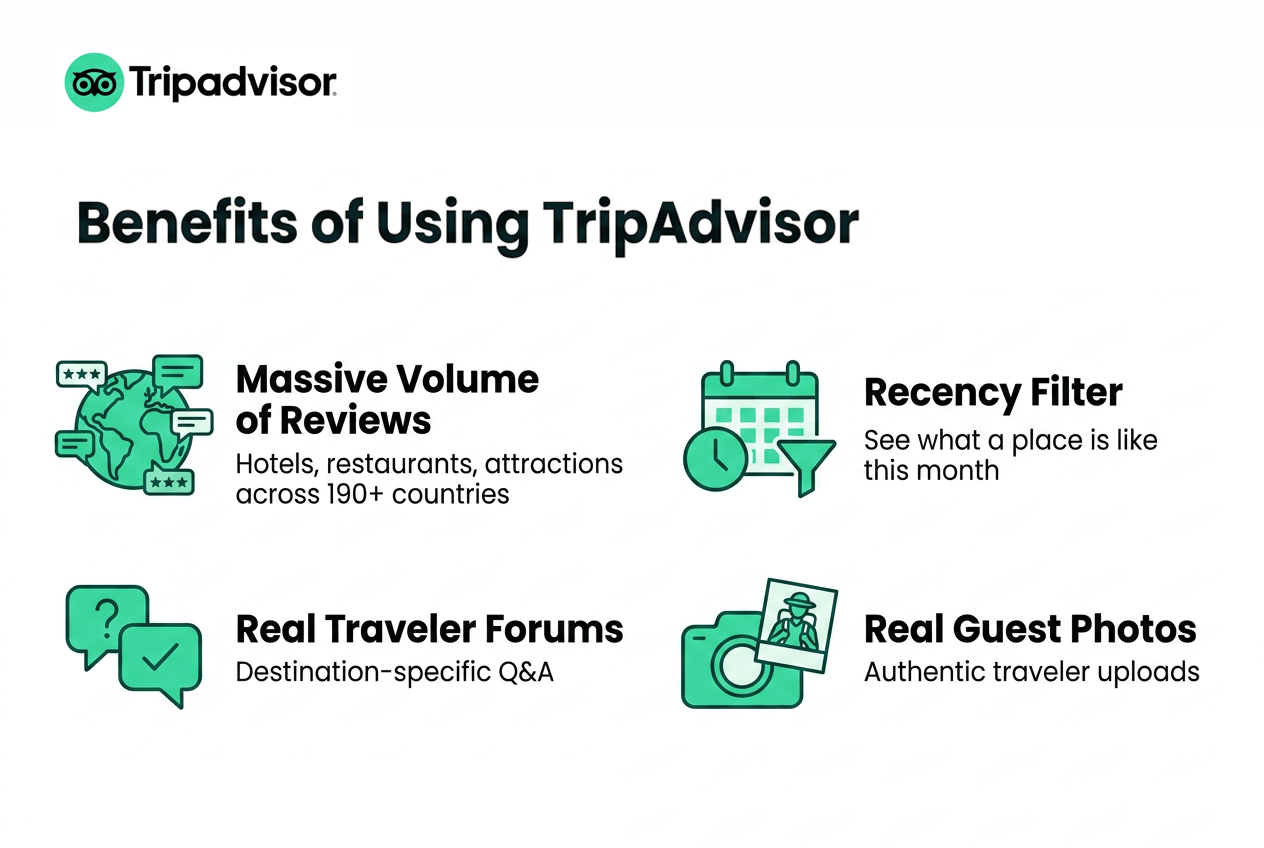
- Massive volume of user-generated reviews across hotels, restaurants, and attractions
- Filter by “most recent” so you see what a place is like this month, not three years back
- Forums where real travelers answer niche, destination-specific questions
- Photo uploads from actual guests, not just polished marketing shots
- Coverage that stretches into small towns most booking sites barely touch
What TripAdvisor Actually Is
TripAdvisor launched in 2000 and has grown into one of the largest travel platforms on the planet, pulling in around 400 to 460 million unique visitors a month. The core idea never really changed: real travelers post reviews, photos, and ratings for hotels, restaurants, and attractions, and everyone else uses that pile of feedback to plan smarter.
What has changed is the depth. Reviews for tours and activities grew close to 45% year over year recently, meaning people rate the whole trip now, not just where they slept. TripAdvisor covers destinations in more than 190 countries, and the forums still have long-time travelers answering oddly specific questions about visa rules or which trail closes early in winter.
What TripAdvisor Offers
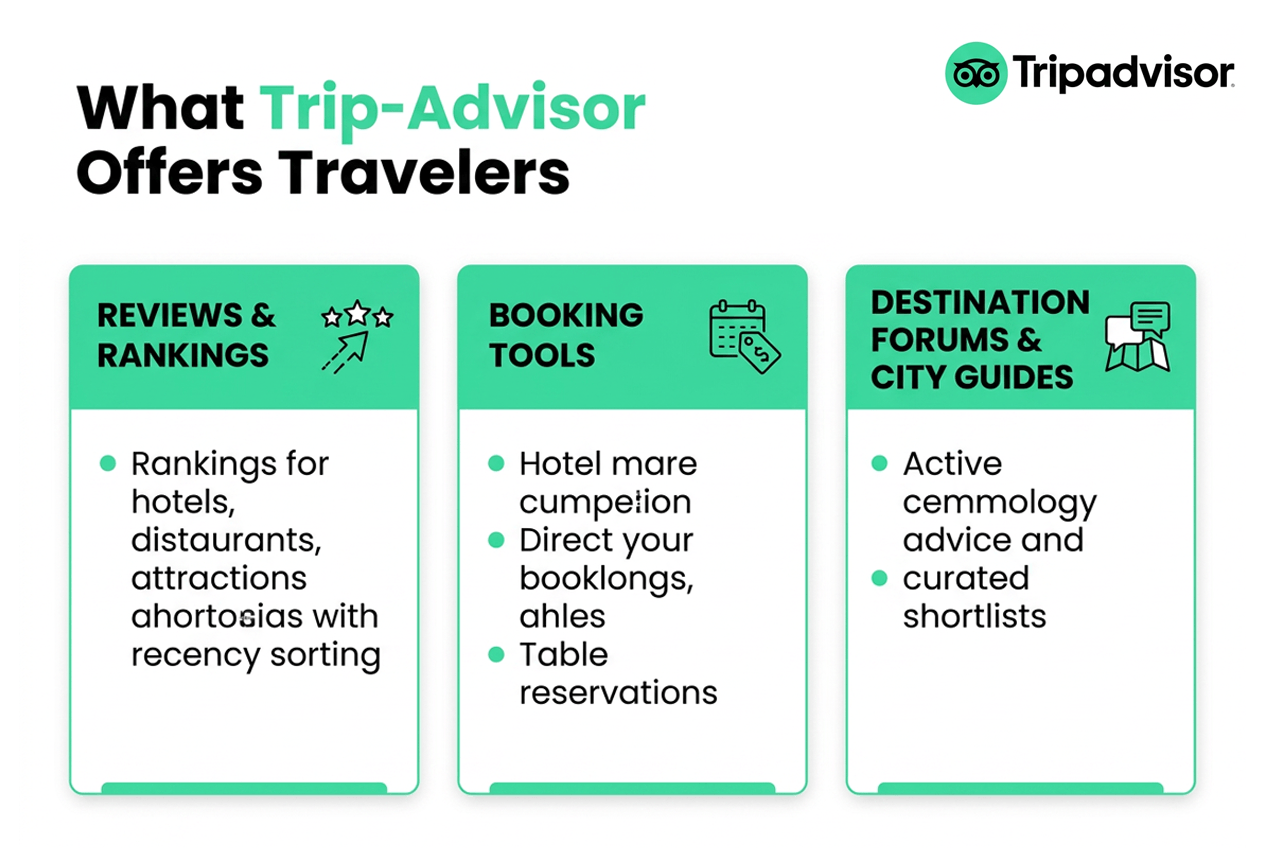
Reviews and Rankings
The engine room of the site. Hotels, restaurants, and attractions all get ranked within their city or region, sortable by traveler rating, price, or distance. The recency filter matters more than people realize, a restaurant great in 2022 under different management might be a totally different experience now.
Booking Tools
TripAdvisor is not purely a review archive anymore. It compares hotel prices across multiple booking sites in one search, lets you book tours and activities directly, and reserves restaurant tables in select cities. Less a single booking engine, more a price-comparison layer sitting on top of the ones you already know.
Travel Forums and Guides
Destination forums are still active, and this is where some of the best advice lives, written by someone who visited last month rather than a decade ago. City guides pull top-rated spots into ready-made shortlists too.
Is TripAdvisor Reliable? The Trust Question
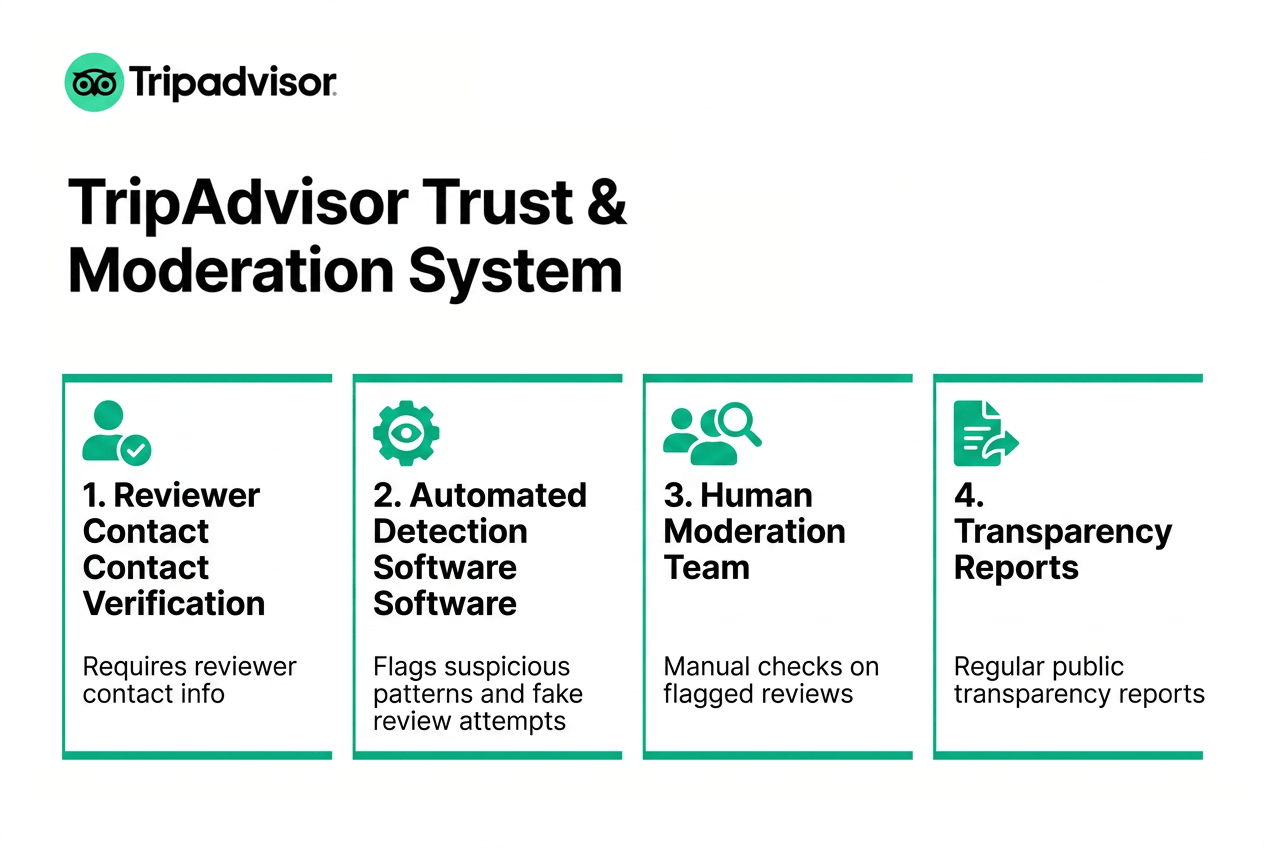
Here is the part that matters most, and the part most reviews gloss over. TripAdvisor has faced real scrutiny over fake or paid reviews, and it is not shy about admitting the problem exists. The company publishes transparency reports and has invested heavily in moderation, requiring contact information from reviewers and running detection software to flag suspicious patterns. Human moderators still check flagged reviews too.
Does that mean every review is gospel? No. Some hotels do still game the system, and a small business with only a handful of reviews is easier to manipulate than one with thousands. The fix travelers use is simple: read the recent reviews, skim for repeated phrasing across suspiciously glowing ones, and weigh a hotel with 3,000 honest-looking reviews more heavily than one with 40.
Compare hotel prices on TripAdvisor before you book.
TripAdvisor vs. Competitors
| Parameter | TripAdvisor | Google Reviews | Yelp |
| Review Volume | Very high, hundreds of millions across all categories | Very high, but mixed with non-travel businesses | Moderate, concentrated in restaurants and local services |
| Global Coverage | Strong in 190+ countries, deep in smaller towns | Strong everywhere maps exist, but thinner detail abroad | Weak outside major US and a few international cities |
| Booking Integration | Built-in hotel price comparison and tour booking | None, links out to Maps or a business’s own site | Limited, mostly reservation widgets for restaurants |
| Fake Review Moderation | Active detection software plus human moderators and public transparency reports | Automated flagging, less visible reporting | Automated filter, criticized for hiding legitimate reviews too |
| Best For | Trip planning across hotels, food, and activities together | Quick local checks while already on the map | Restaurant and local business research inside the US |
TripAdvisor’s real edge over Google shows up in depth. Google reviews are fast and convenient, but a TripAdvisor listing usually comes with dozens of traveler photos, a forum thread, and reviews specifically written by people traveling, not locals leaving a quick star rating. Yelp holds its own for restaurants in major US cities, but once you leave the country, its coverage thins out fast, and TripAdvisor simply has more ground covered.
Booking Experience and Everyday Use
The app is where most of this plays out day to day. It is mobile-first now, fitting how people actually use it, mid-trip, deciding where to eat in the next twenty minutes rather than months ahead at a desk. Search filters narrow by price, traveler type, and distance, and “Near Me Now” earns its keep on an unfamiliar street corner.
Customer support draws consistent complaints. Since TripAdvisor is largely a review and comparison layer rather than the booking party for most reservations, resolving a problem sometimes means chasing the original hotel or third-party site instead. Worth knowing before you assume the platform fixes everything if a booking goes sideways.
Start planning your next trip with TripAdvisor.
TripAdvisor Pros and Cons
| Pros | Cons |
| Massive, detailed review base across hotels, food, and activities | Some fake or paid reviews still slip past moderation |
| Recency filter shows what a place is like right now | Customer support is limited since bookings often route through partners |
| Active forums with genuinely useful, destination-specific advice | Smaller, lesser-known businesses are easier to manipulate with fake reviews |
| Free to browse, with built-in hotel price comparison | Booking flow can redirect you off-platform to finish |
| Coverage extends into small towns most sites skip | App notifications and promos can feel a bit aggressive |
Frequently Asked Questions
Is TripAdvisor still trustworthy in 2026? Mostly. The platform invests real resources into moderation and transparency, though no review site is fully immune to fake entries. Lean on recent reviews and high review counts.
Does TripAdvisor charge fees to use? No, browsing is free. Some bookings through partner sites may carry their own fees, so check the final total before confirming.
Is TripAdvisor better than Google reviews? For depth, generally yes, especially for hotels, tours, and international travel. For a quick local restaurant check, Google’s convenience wins.
Can I book hotels directly through TripAdvisor? Yes, it compares rates across partners and lets you complete some bookings on the platform, though you’re often redirected to finish.
How does TripAdvisor handle fake reviews? It requires reviewer contact info, runs detection software, and uses human moderators on flagged content, with regular transparency reports on the results.
Final Verdict
TripAdvisor earned its reputation the slow way, one honest review at a time, and that history still counts for something in 2026. It is not perfect. Fake reviews have not been fully solved by any platform, this one included, and customer support can feel thin once a booking actually goes wrong. But for sheer research depth across hotels, restaurants, and things to do, it remains one of the most useful tools a traveler can carry in their pocket.
If you are planning a trip anywhere in the US or beyond, sort by recent reviews, cross-check a place with a healthy review count, and treat the forums as a genuine resource rather than an afterthought. Used that way, TripAdvisor still does exactly what it was built to do a decade ago.